
Less downtime. Clear repair priorities.

Commercial flat roof repair in New Braunfels, TX

Find the entry point, protect the building, and plan repairs around tenants, equipment, and business hours.

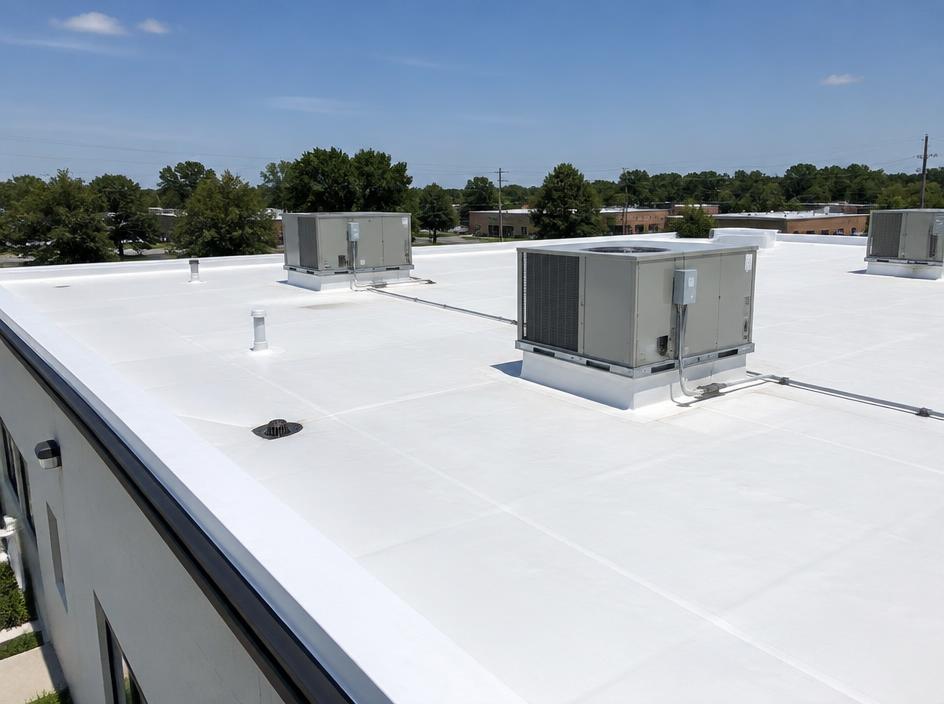
Commercial flat roof membrane and rooftop equipment

Watch · 1:08 explainer

Commercial Flat Roof Repair in New Braunfels, TX: Ponding, TPO/EPDM Seams & Patch vs. Recover

0:00 / 1:08

Key takeaways

  • Water that sits for days after rain wears a flat roof faster.
  • TPO and EPDM seams can open from heat, movement, and foot traffic.
  • Wet insulation below the membrane changes the repair plan.
  • A moisture survey helps choose patch, recovery, or replacement.
Read the transcript

0:00 Intro. This guide explains the most common problems on flat and low slope commercial roofs in New Braunfels, Texas.

0:09 Ponding water. When water sits on a flat roof for days after rain, it is called ponding. It adds weight, wears the surface faster, and finds any weak spot. Clogged drains and sagging areas are the usual causes.

0:25 Membrane seams. Many flat roofs use a single sheet membrane, like white TPO or black EPDM rubber. The sheets are joined at seams. Heat, movement, and foot traffic can open those seams, and water slips into the insulation below.

0:43 Patch or recover. If the damage is small and the insulation is dry, a local patch may be enough. If large areas hold wet insulation, a patch will not last. A moisture survey helps decide between a repair, a recovery, or a full replacement. Get it priced in writing.

Call (830) 272-7520

Start with what you see

What is happening with your roof?

Choose a symptom for likely causes and a safe next step. This guide does not replace an on-roof inspection.

Likely places to check

Ceiling leak

Common causes include a pipe boot, roof valley, vent, skylight, or damaged shingle above the wet area.

Do this now: Move valuables, catch the water, turn off power near wet fixtures, and photograph the stain.

Protect the building

01

TPO seams

Heat-welded seams and patches need close checks at laps, corners, and old repairs.

02

Roof penetrations

Pipes, curbs, drains, and HVAC units create many of the highest-risk transitions.

03

Ponding water

Standing water points to drainage or slope trouble and can speed up wear.

04

Leak tracing

Water can travel under a membrane before it shows inside, so the ceiling stain may not be under the opening.

Built for this area

New Braunfels heat, hail, wind, and hard rain

Comal County roofs face long sun exposure, fast temperature changes, strong storms, and wind-driven rain. A sound commercial flat roof repair plan must manage water at every joint, allow materials to move with heat, and keep attic airflow balanced.

Roof anatomy

Five places where roof systems fail

01

Ridge and vents

Heat and moisture leave through balanced exhaust. Loose caps and failed vent flashing can admit rain.

02

Roof field

Shingles or panels shed water. Cracks, punctures, lifted seams, and worn surfaces reduce protection.

03

Valleys

Two slopes collect water here. Debris, poor laps, and damaged underlayment can create fast leaks.

04

Walls and chimneys

Step and counterflashing must move water over the roof instead of relying on surface caulk.

05

Eaves and gutters

Drip edge, starter material, intake airflow, and clear drainage protect the roof perimeter.

Educational roof-system guide. The exact source must be confirmed at the property.

Make the right-sized choice

Repair or replace?

Repair may fit

A traceable puncture, open seam, failed flashing, drain issue, or limited wet area on a serviceable membrane.

Replacement may fit

Widespread wet insulation, repeated failures, shrinking or brittle membrane, or repairs that no longer hold.

The roof age, damage spread, deck condition, material match, and written scope should decide the recommendation—not a sales shortcut.

System choices

Materials and methods

  • Compatible TPO membrane and heat-welded repairs
  • Flashing systems for curbs, pipes, walls, and drains
  • Maintenance coatings only when the existing roof is a sound candidate

Exact pricing

What changes the cost

  • Roof area, access, equipment, and safety setup
  • Moisture testing and wet insulation removal
  • Membrane, flashing, drainage, and warranty requirements

Work sequence

What happens next

  1. 1Map interior symptoms and roof equipment
  2. 2Trace moisture and mark repair zones
  3. 3Coordinate access and business needs
  4. 4Repair, test, document, and update the roof log

Homeowner standards

What you should expect from a roofer

01

Photos tied to the exact problem

02

A written scope before work starts

03

Clear material and warranty details

04

A safe work area and final cleanup

Repair without guessing

  1. Step 1

    Map the inside leak

    Record when it leaks, where it shows, and what equipment or drains sit nearby.

  2. Step 2

    Inspect the roof field

    Check seams, flashings, drains, curbs, punctures, and signs of trapped moisture.

  3. Step 3

    Set repair zones

    Separate urgent openings from maintenance items and larger replacement areas.

  4. Step 4

    Plan access

    Coordinate roof access, tenant needs, equipment, odors, and work hours before repairs begin.

How urgent is your building's roof?

Can Wait

  • • Surface wear with no leaks

Check Soon

  • • Water still sitting 48 hours after rain
  • • Open seams or blisters

Call Now

  • • Leaks over tenants, stock, or equipment
  • • Clogged drains during storm season

A practical maintenance rhythm

After major storms

Check for punctures, moved equipment, clogged drains, and wind-lifted edges.

Before warranty work

Read the system warranty and use approved materials and repair steps when required.

Keep a roof log

Store leak dates, photos, repair areas, invoices, and rooftop equipment changes in one place.

Think you found the problem?

Call Now

What changes the cost of commercial roof repair in New Braunfels?

Every roof is different. Your exact price comes after the roof is checked.

FactorSmaller jobBigger job
Roof areaSmall section repairLarge square footage
Membrane typeCommon TPO or modified bitumenOlder built-up roof
Wet insulationDry under the membraneWet boards to replace
Work hoursNormal hoursAfter-hours to avoid disruption

Common questions

Can you find a flat-roof leak in one visit?

Sometimes. Water can travel far under a membrane, so some leaks need testing, dry weather, or more than one inspection.

Can TPO be patched?

Many isolated TPO cuts and failed areas can be cleaned and heat-welded with compatible material when the roof is otherwise serviceable.

When is replacement better than repair?

Replacement may make more sense when wet insulation is widespread, seams fail across large areas, or repeated repairs no longer hold.

Will work stop business?

Many repairs can be planned around access and busy hours. The exact plan depends on the leak, roof system, and safety needs.

How often should a flat roof be checked?

Check after major storms and on a regular schedule. Warranty terms or building needs may call for more frequent visits.

Also serving Gruene, Canyon Lake, San Marcos, Seguin, and Schertz. View full service area

Roof help near you

Active leak? Read the emergency guide →
Call Now