
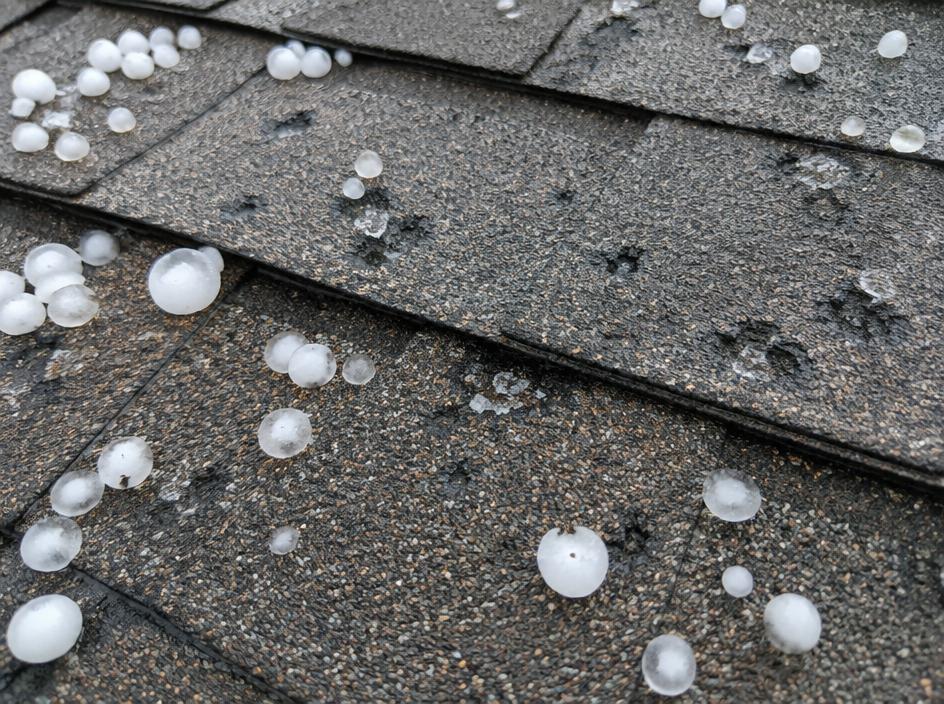
Close inspection of hail marks on asphalt shingles

After hail, wind, or hard rain

Storm and hail damage roof repair in New Braunfels, TX

See what different hail sizes may leave behind, document the roof, and follow a clear Texas claim path without guessing.

Watch · 1:03 explainer

Hail Damage in New Braunfels, TX: Hail Size, Bruising & Claim Steps

0:00 / 1:03

Key takeaways

  • Bigger hail does deeper damage: granule loss, then bruising, then cracks.
  • A bruise feels soft. Granule loss looks like dark bald spots.
  • Dents on vents and gutters help show how hard the storm hit.
  • Active leak? Tarp first. File the claim with dated photos.
Read the transcript

0:00 Intro. This guide explains how hail damages a roof in the Hill Country, and what to do after a storm in New Braunfels, Texas.

0:10 Hail size. Small hail, about pea or mothball size, often knocks granules loose. Quarter size hail can bruise the shingle mat underneath. Golf ball hail and larger can crack shingles and expose the fiberglass.

0:26 Granule loss vs. bruising. Granule loss looks like dark bald spots and heavy grit in the gutters. A bruise feels soft when pressed, like a bruise on an apple. Dents on vents, gutters, and flashing help show how hard the storm hit.

0:43 Claim steps and tarping. Take dated photos from the ground. Get an inspection, then file your claim with proof. Be there when the adjuster checks the roof. If water is coming in now, call for an emergency tarp first. The full repair waits for dry weather.

Call (830) 272-7520

Start with what you see

What is happening with your roof?

Choose a symptom for likely causes and a safe next step. This guide does not replace an on-roof inspection.

Likely places to check

Ceiling leak

Common causes include a pipe boot, roof valley, vent, skylight, or damaged shingle above the wet area.

Do this now: Move valuables, catch the water, turn off power near wet fixtures, and photograph the stain.

Water coming in now?

Ask about emergency tarping

Tarping is temporary protection. Availability and safe timing depend on weather and roof conditions.

Call (830) 272-7520

Built for this area

New Braunfels heat, hail, wind, and hard rain

Comal County roofs face long sun exposure, fast temperature changes, strong storms, and wind-driven rain. A sound storm and hail damage roof repair plan must manage water at every joint, allow materials to move with heat, and keep attic airflow balanced.

Roof anatomy

Five places where roof systems fail

01

Ridge and vents

Heat and moisture leave through balanced exhaust. Loose caps and failed vent flashing can admit rain.

02

Roof field

Shingles or panels shed water. Cracks, punctures, lifted seams, and worn surfaces reduce protection.

03

Valleys

Two slopes collect water here. Debris, poor laps, and damaged underlayment can create fast leaks.

04

Walls and chimneys

Step and counterflashing must move water over the roof instead of relying on surface caulk.

05

Eaves and gutters

Drip edge, starter material, intake airflow, and clear drainage protect the roof perimeter.

Educational roof-system guide. The exact source must be confirmed at the property.

Make the right-sized choice

Repair or replace?

Repair may fit

A limited number of repairable impacts or wind-opened areas while the surrounding roof remains serviceable.

Replacement may fit

A broad damage pattern, widespread broken seals, exposed mat, or a roof that cannot be repaired with compatible materials.

The roof age, damage spread, deck condition, material match, and written scope should decide the recommendation—not a sales shortcut.

System choices

Materials and methods

  • Compatible shingle repair for isolated damage
  • Full roofing-system replacement for widespread damage
  • Metal vent, flashing, and gutter repairs tied to the documented storm pattern

Exact pricing

What changes the cost

  • Damage spread and safe roof access
  • Material matching and hidden deck damage
  • Temporary protection, flashing, gutters, and the written scope

Work sequence

What happens next

  1. 1Protect active openings
  2. 2Document the roof and exterior
  3. 3Review the repair scope and insurer findings
  4. 4Complete and photograph the approved work

Homeowner standards

What you should expect from a roofer

01

Photos tied to the exact problem

02

A written scope before work starts

03

Clear material and warranty details

04

A safe work area and final cleanup

Hail impact scale

Stone size gives a clue—not a verdict

Wind, roof age, material, slope direction, and stone hardness change the result. Use the scale to know what to inspect, not to decide coverage from the yard.

¼–½″

Pea to mothball

May loosen granules or leave small marks, especially on older shingles. Often hard to separate from normal wear.

1″

Quarter size

Can bruise the asphalt mat, knock away granules, or mark soft metal. Damage is not automatic.

1¾″

Golf ball

May crack shingles, expose fiberglass, and dent vents or gutters. A prompt professional inspection is sensible.

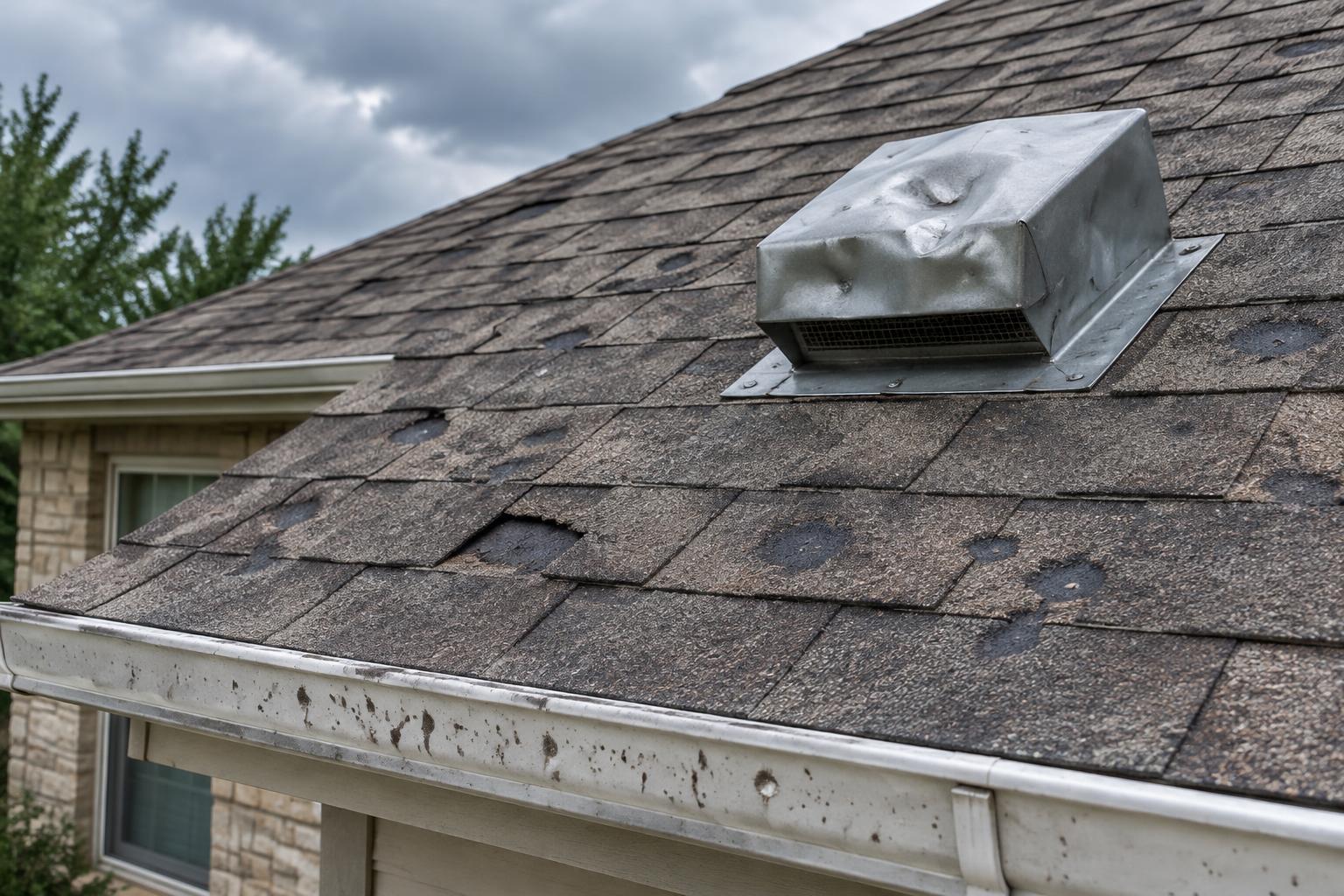
Representative hail damage with dented vent, marked shingles, and gutter spatter

Damage field guide

Three surfaces tell the storm story

Dented vents

Soft metal may show fresh impact shape and storm direction.

Cracked shingles

A bruise, split, or exposed mat matters more than a loose granule alone.

Gutter spatter

Fresh clean spots and dents can support the larger roof pattern.

Image is a representative storm-damage example, not a specific customer claim.

Texas insurance claim roadmap

From storm date to approved scope

  1. 01

    Inspect and document

    Photograph roof surfaces, vents, flashing, gutters, and interior water. Drone documentation may be used when available and safe.

  2. 02

    File with photo proof

    Give your insurer the storm date and requested records. The insurance company—not the roofer—decides coverage.

  3. 03

    Meet the adjuster

    The roofer may attend the roof visit to point out documented conditions without acting as your public adjuster.

  4. 04

    Approve scope and supplements

    Compare the approved scope with the repair plan. Added covered items may be sent to the insurer for review when supported.

Texas deductible rule: a contractor cannot pay, waive, absorb, or rebate your insurance deductible. Be careful with anyone who offers.

Document the full pattern

Storm damage worth photographing

Clear overview and close-up photos help connect each condition to its location. Stay on the ground and leave roof access to a trained roofer.
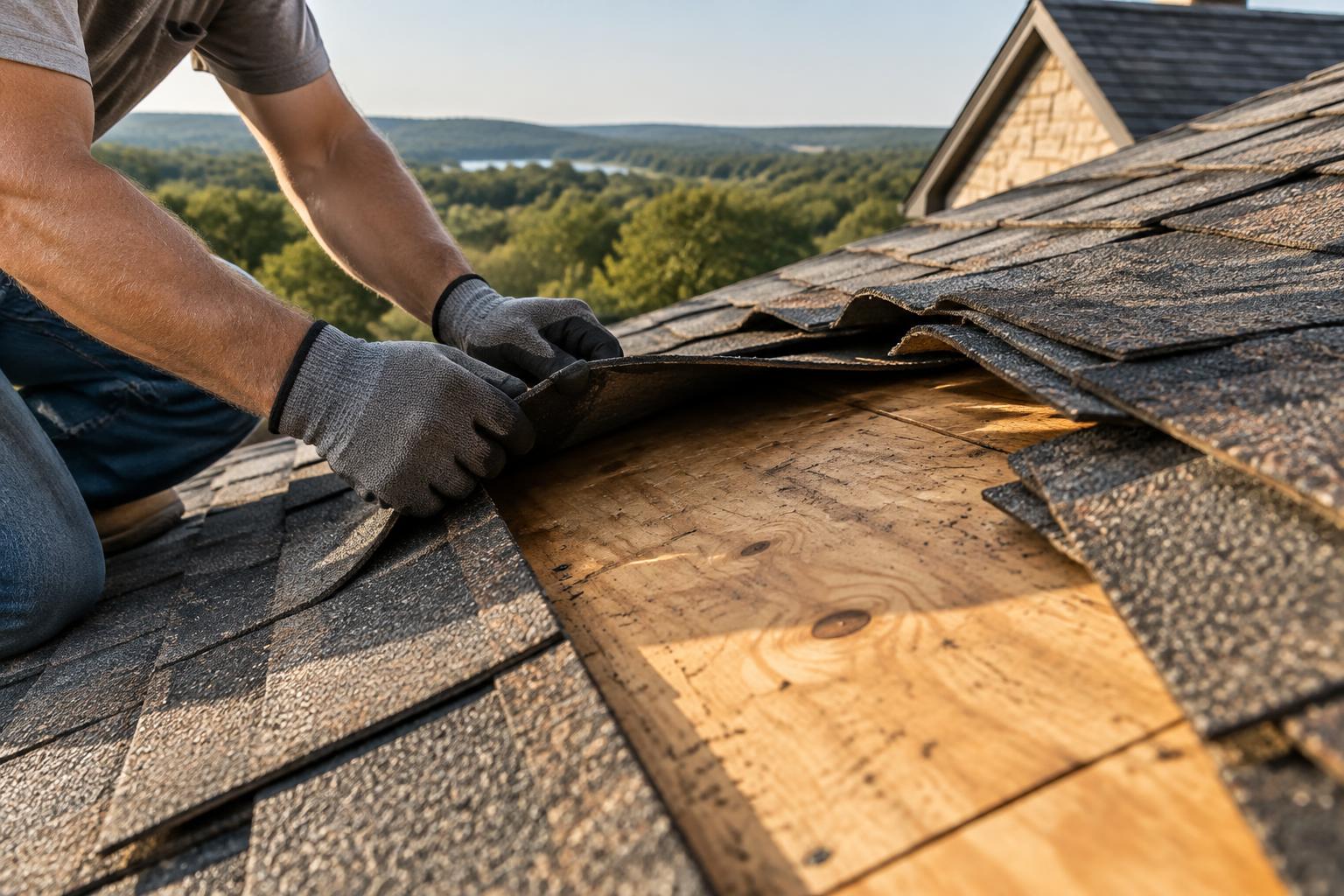
Representative close inspection of lifted and damaged shingles
Roof surface: bruises, cracks, lifted seals, flashing, and exposed mat can show where wind or impact changed the roof.
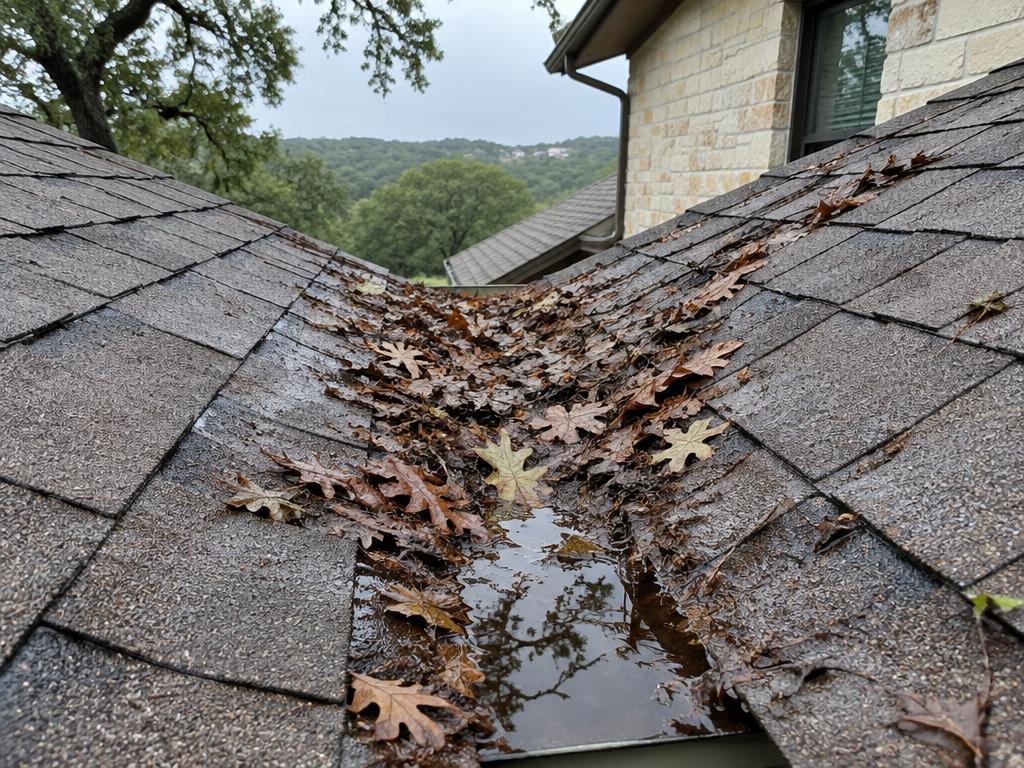
Representative roof valley and drainage area inspection
Supporting clues: valleys, gutters, vents, downspouts, screens, and indoor water marks help show the wider pattern.

Representative condition examples, not photos from a customer claim.

After the storm: what comes first?

Can Wait

  • • Small dents only on metal vents

Check Soon

  • • Shingle pieces in the yard
  • • Dented gutters or downspouts

Call Now

  • • A tree or big branch on the roof
  • • Water coming in after the storm

Think you found the problem?

Call Now

Common questions

What does hail damage look like on shingles?

Fresh granule loss, dark bruises, cracked edges, exposed mat, and dents in vents or gutters can be clues. A close inspection looks for a consistent impact pattern.

Does quarter-size hail always damage a roof?

No. Hail size alone does not prove damage. Wind, stone hardness, roof age, shingle type, slope direction, and impact angle all matter.

Should I call a roofer or my insurer first?

Protect active water first. Then document what happened, review your policy, and ask your insurer about its claim steps and deadlines.

Can a roofer meet my insurance adjuster?

A roofer may attend the inspection to point out documented roof conditions. Your insurer decides coverage and claim payment.

What is an insurance supplement?

It is added documentation for covered work or quantities missing from the first scope, including some damage found during tear-off. The insurer reviews and decides it.

Can the roofer waive my deductible?

No. Texas law says a contractor cannot pay, waive, absorb, or rebate your deductible.

Is drone documentation always available?

No. It depends on the roofer, pilot credentials, weather, trees, roof shape, airspace, and equipment. Confirm it when the visit is scheduled.

Does hail damage mean I need a full replacement?

Not always. The answer depends on the damage pattern, roof age, material, repairability, and what your policy covers.

Also serving Gruene, Canyon Lake, San Marcos, Seguin, and Schertz. View full service area

Storm help near you

Call Now